 Recipe by Priya Nair · Serves 4 · Medium
Why this steak works
Reverse-searing — low oven first, ripping-hot pan last — gives edge-to-edge rosy meat with a deep crust, no grey band. While the oven does its quiet work, the sides roast alongside and a garlic-thyme butter waits for the baste.
A thermometer is the whole trick. Cook to temperature, not to time, and rest half as long as you seared.
Prep10 min
Cook45 min
Serves4
LevelMedium
Ingredients
- 4 sirloin or ribeye steaks, 3cm thick
- Coarse salt and cracked pepper
- 60g butter, 4 garlic cloves, thyme
- 600g baby potatoes and carrots
- Green salad and mustard, to serve
Method
1
Salt early. Season the steaks 40 minutes ahead (or overnight). Start the vegetables roasting at 200°C.
2
Low and slow. Roast steaks on a rack at 120°C until 48°C internal for medium-rare, about 30 minutes.
3
Sear hard. In a smoking-hot pan, sear 60–90 seconds per side with butter, garlic and thyme, basting constantly.
4
Rest. Rest 8–10 minutes on a warm plate so the juices redistribute instead of flooding the board.
5
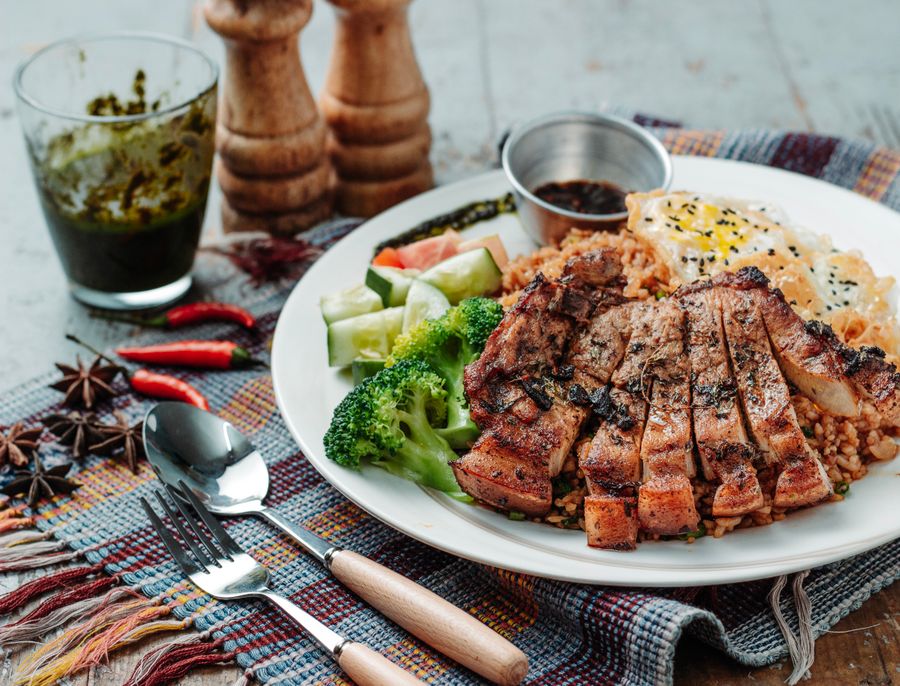
Plate. Slice against the grain, arrange with roast vegetables, spoon over the pan butter and serve with salad.
Kitchen notes
Dry surface, deep crust
Pat steaks bone-dry before searing. Moisture steams; dryness crusts.
Trust the thermometer
Touch tests lie, especially with thick cuts. A probe is the cheapest upgrade in steak cookery.
Slice against the grain
Short fibres eat tender. Find the lines in the meat and cut across them, on a bias.